
How We Successfully Launched and Recovered Our First Rocket
Sunburnt Space Co has successfully launched and recovered its first rocket, proving the propulsion, recovery, and operational systems behind Australia’s emerging microgravity service. This milestone validates our model of affordable, repeatable access to space and sets the foundation for commercial flights beginning in 2026.
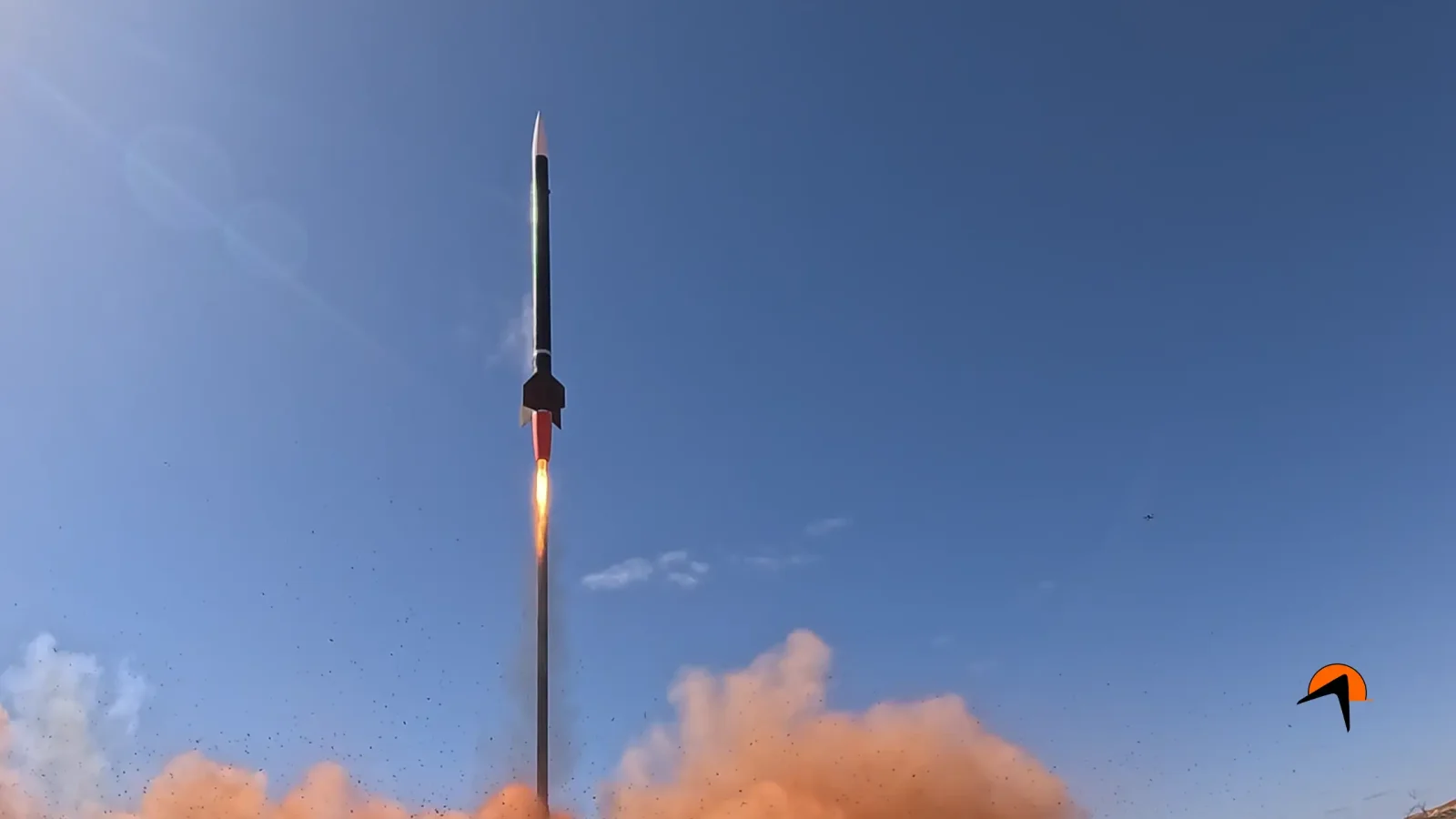
How We Successfully Launched and Recovered Our First Rocket…And What It Proves
In October 2025, we completed one of the most important milestones in any launch company’s journey: a successful rocket launch and full recovery.
For a team building Australia’s first commercial microgravity service, this was the moment our rocket design and build effort was vindicated.
The Mission: Prove the Fundamentals
Our goal for the first Mini Meggs flight was simple and deliberate:
Prove propulsion
Prove recovery
Prove payload integration
Prove operations at our White Cliffs launch site
These are the building blocks of everything we do next. From microgravity flights in 2026 to orbital capability in 2027. And we’re proud to say the mission delivered on every one.
Propulsion That Performs
The Mini Meggs vehicle was powered by commercially made Hybrid motor. Mainly because the launch was to take place at a Tripoli sanctioned flight and liquids were not allowed at this time.
On launch day, the engine performed exactly as designed: clean ignition, stable burn, and predictable ascent, confirming our propulsion capability is flight-ready. Even if a little under-fuelled. Locking in our next challenge of flying on our liquid fuelled engine.
Full Recovery. A Massive Advantage
Recovery isn’t just about getting hardware back. It’s about:
getting your payload back
analysing data within days
re-flying quickly
reducing cost per experiment
increasing flight cadence
Our parachute and recovery system performed flawlessly. The vehicle was located, secured, and returned to the team, demonstrating that our approach to “launch → recover → repeat” is reliable.
For microgravity users, especially in biology, hardware testing, and materials science, this is a game changer. It means repeatable science, not one-off missions.
Proving Payload Integration
This mission also validated our payload interfaces. Confirming secure mounting, clean separation from structural loads, and stable ride dynamics.
For researchers preparing for 2026 flights, this gives confidence that:
hardware will survive launch
biological payloads remain protected
experiments stay controlled
data channels are reliable
It de-risks flight before customers ever book.
White Cliffs: Australia’s Newest Launch Site
Operating at White Cliffs, NSW gave us crucial experience:
range compliance
site logistics
flight safety systems
recovery coordination
telemetry and ops under real conditions
White Cliffs is now a proven launch environment: wide open, low traffic, and perfectly suited for safe commercial microgravity flights.
What This Proves
This single flight demonstrates that Sunburnt Space Co has:
✔ Proven propulsion
Mini Insanity engine works in real flight conditions.
✔ Proven recovery
We can fly, retrieve, and re-fly — dramatically reducing costs.
✔ Proven integration
Payloads can be flown safely and returned quickly.
✔ Proven operations
Our team can launch rockets from Australian soil, reliably.
✔ Proven momentum
This flight unlocks the full commercial program beginning in early 2026.
Why This Matters for Australia’s Space Industry
This is the foundation of a commercial microgravity service, something Australia has never had—and something global researchers desperately need.
Access is currently slow, expensive, and largely offshore. By proving we can launch and recover rockets locally, we’re establishing:
sovereign microgravity access
faster R&D cycles
affordable early-stage testing
a path from suborbital to orbit
new capabilities for researchers, universities, and industry
This is how Australia becomes a launch nation.
What’s Next
This flight was the first step in our 3-year path to orbit.
Next milestones include:
commercial microgravity flights beginning March 2026
1–2 minute microgravity flights with active control by mid-2026
extended 5–10 minute flights later in 2026
Meggs-series rockets reaching up to 30 minutes of microgravity in 2027
orbital payload delivery thereafter
We’re building a launch service that researchers can rely on — fast, affordable, repeatable, and sovereign.
If you’re ready to fly…
Our 2026 flight manifest is now open with limited early slots remaining.
You can view it here: 2026 Flight Manifest
Get our regular updates
Launches, milestones, and the engineering notes behind them. Straight to your inbox.
← All articles