
We Flew. Our First Commercial Mission On Mini Meggs.
Our first commercial mission on Mini Meggs is done. The engine lit, the flight was stable, and our customers' payloads came home. Here's how launch day unfolded at Red Sands.
At 5:22pm on Monday 6 July, after nine hours on site and a full day of waiting on the wind, our Mini Meggs rocket lifted off from the Red Sands Launch Site at White Cliffs, carrying commercial payloads for two customers. The engine lit, the vehicle flew stable, and by nightfall our customers' payloads were back in our hands, in good condition, data and all.
This is the story of that day.
https://youtube.com/shorts/psjkUBqqITs
Before sunrise
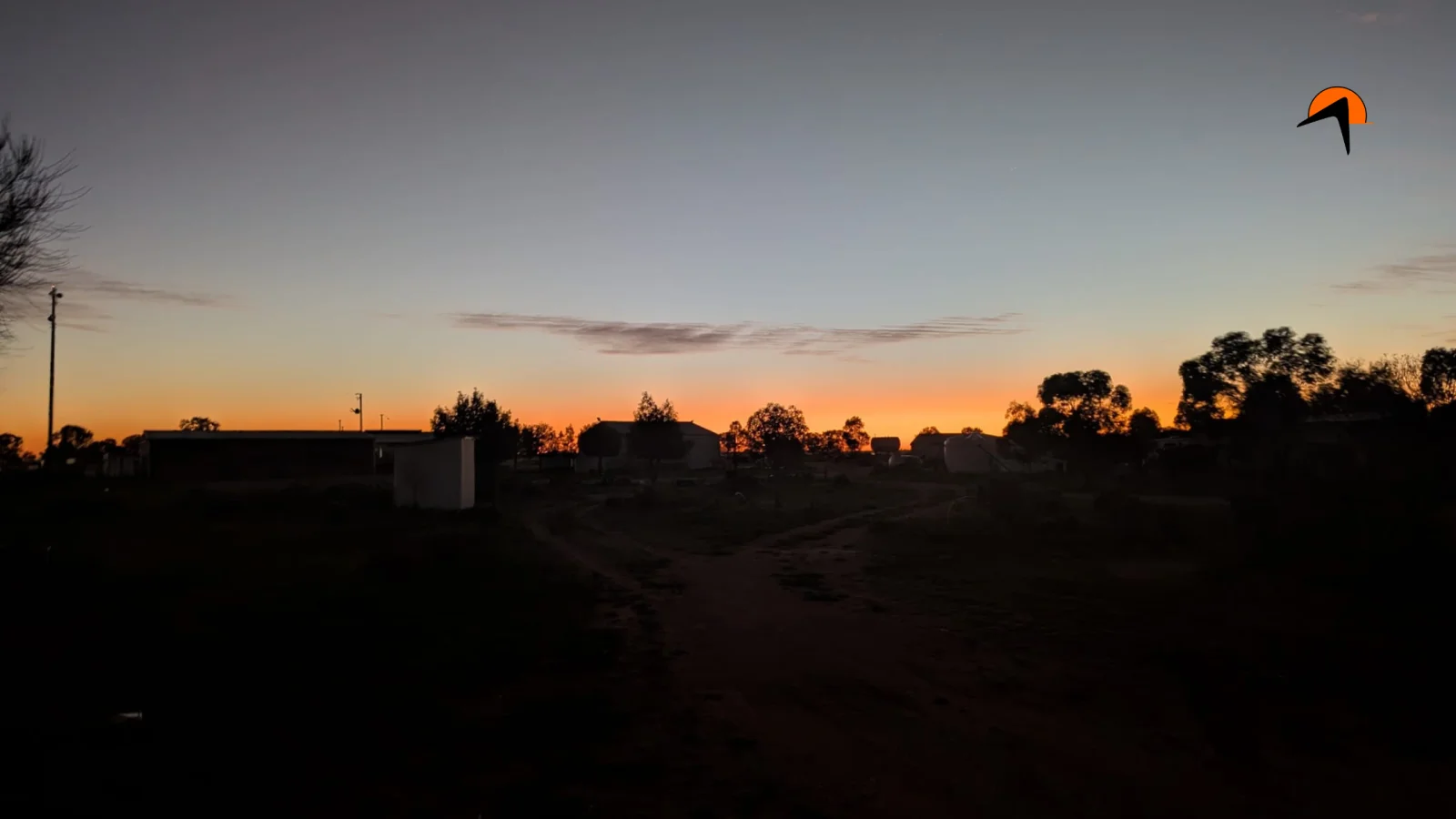
We were in the cars just as the sun came up. The whole Sunburnt team was there: Robin, Sam, Lucas, Josh, Lenny and me, alongside the Endeavour Aerospace crew who run Red Sands. About twelve of us on site by 7am.
The team split in two. Half went to the pad to prep the launch tower and ground support equipment. The rest of us worked the vehicle: fuelling, payload checks, recovery systems, avionics, tracking. By late morning we were ready.
The wind wasn't.
Waiting on the weather
Our limit is 5.5 knots. The morning sat stubbornly above it, and at 11am the morning window closed on us. Next chance was 2pm, with a hard stop at sunset. So we waited, watching the numbers, in that strange state every launch crew knows: nothing to do and everything at stake.
At 4:30pm the wind dropped below the magic number. We were go. Avionics on at the pad, tower set to angle, and the pad team pulled back to launch control. The last hour had been quiet nerves. The last five minutes, you could feel the tension building through the whole crew.
Then the ten second countdown started.
Ignition
I was standing next to the launch control room with Madison, Endeavour's CEO, beside me. When the count over the PA hit one, we looked at each other, smiled, and turned to watch.
About a second after ignition, the rocket was moving up the rail. We had liftoff. I won't print the first word out of my mouth. I was too excited to manage anything else.
The sound was incredible, like a jet spooling up right next to you. And as the rocket kept climbing, we knew we'd got the biggest part of this mission right. We've been building and flying rockets for years. That was never the question. The question was whether a liquid bipropellant engine, our engine, could push a rocket into the sky. Nine engine tests over the past year said it could.
Now we know it can.
The flight, by the numbers
Our liquid bipropellant engine delivered 3.5 kN of thrust off the pad through a 12 second burn
The vehicle reached 300 m/s, Mach 0.9, going transonic
Peak acceleration of just 2.6 g, the gentle flight environment sensitive payloads need
Almost 7 seconds of high-quality microgravity, under 30 milli-g, even on this first low-altitude flight
That last number matters most to our customers. This flight reached 17,000 feet, well short of our 20 km target, because a fill process issue meant we flew on a partial tank. We knew before launch we wouldn't get full altitude, and we flew anyway, because the mission was about proving the system end to end. Even so, the payloads got a clean microgravity window. Higher flights extend that window dramatically.
That's the model we're built on. Fly, learn, fix, fly again in weeks, not years. The fill process fix is already in work.
Getting Them Home
The payloads came down under chute a few kilometres out, conveniently next to the road off the site. The drive out to recover them was a little hairy with the sun setting over the outback, but we had them back at camp that evening, where the team worked through each customer's checklist, shut the payloads down, and got their owners on the phone.
Payload in, integration, launch, recovery, payload and data back to the customer. The full commercial loop, run end to end for the first time, for MetaKosmos and Orbit2Orbit.
In Our Customers' Words
"This Sunburnt launch is a step change for building sovereign and commercial launch capabilities for Australia."
Kiriti Rambhatla, MetaKosmos
"Every new Lab2Space flight partner begins with a Parallax mission. It allows Orbit2Orbit to learn the launch partner, the vehicle, the operations flow, the interfaces, and how our Payload Housing Units perform through that pathway. Sunburnt Space has now successfully flown the first iteration of Parallax, and together we have achieved a number of important firsts. We are proud to have Sunburnt Space as a Lab2Space flight partner and look forward to reviewing the data, learning from the mission, and building toward the next flight campaign."
Bradley Hatton-Jones, Orbit2Orbit
What's next
The next mission is targeting late 2026, most likely a two-stage configuration aiming for 25 km. Every lesson from this flight is already feeding into it and into the vehicles behind it.
We were happy this time to see the rocket light and climb. Next time we'll be working hard to hit our altitude and give our customers the conditions they came for.
Launch. Learn. Launch Again.
Get our regular updates
Launches, milestones, and the engineering notes behind them. Straight to your inbox.
← All articles